
How Mold Remediation Contractors Can Book More Jobs
If your mold business suddenly got more work, what would break first? In real life, crews get stretched, schedules bunch up, and the risk of corners getting cut grows when the workload spikes.
That is why safety, clear procedures, and keeping crews within their limits matter more than ever. Rushing a job or chasing more work often costs time later with cleanup, callbacks, and rework.
The idea here is to stay steady, respect safety, and hold line on crew capacity even when demand shifts.
- Build a steady pipeline of mold jobs without chasing every lead
- Tighten testing and scope standards before you add more leads
- Protect your crew and schedule when containment is tight
- Price mold jobs so you do not rush cleanup or documentation
- Keep what brings mold calls and cut what attracts tire kickers
- Summary
- FAQs
Build a steady pipeline of mold jobs without chasing every lead
In mold work a busy crew means the clock runs from the first call to the final walkthrough, and a small misread can push the day off. Estimates pile up when the scope isn't clear and callbacks add time, travel, and rechecking.
A bad-fit job or a misread on capacity can waste a day chasing the wrong task, while clear expectations keep work focused and teams from getting stretched. For example, a reschedule when the crew is tied up on a prior job and the client has to push the inspection to next week.
Tighten testing and scope standards before you add more leads
People try to grab more mold work by chasing the biggest jobs and letting the scope stay fuzzy. That loose scope bleeds into estimates and schedules, so the crew heads out with confusion and little direction.
Callbacks pile up, reschedules happen, and mixed signals slip into customer calls, while the calendar fills with half-finished tasks. Clean means a crisp defined scope, a steady pace for the crew, fewer callbacks, and customers hearing steady, straight information.
Protect your crew and schedule when containment is tight
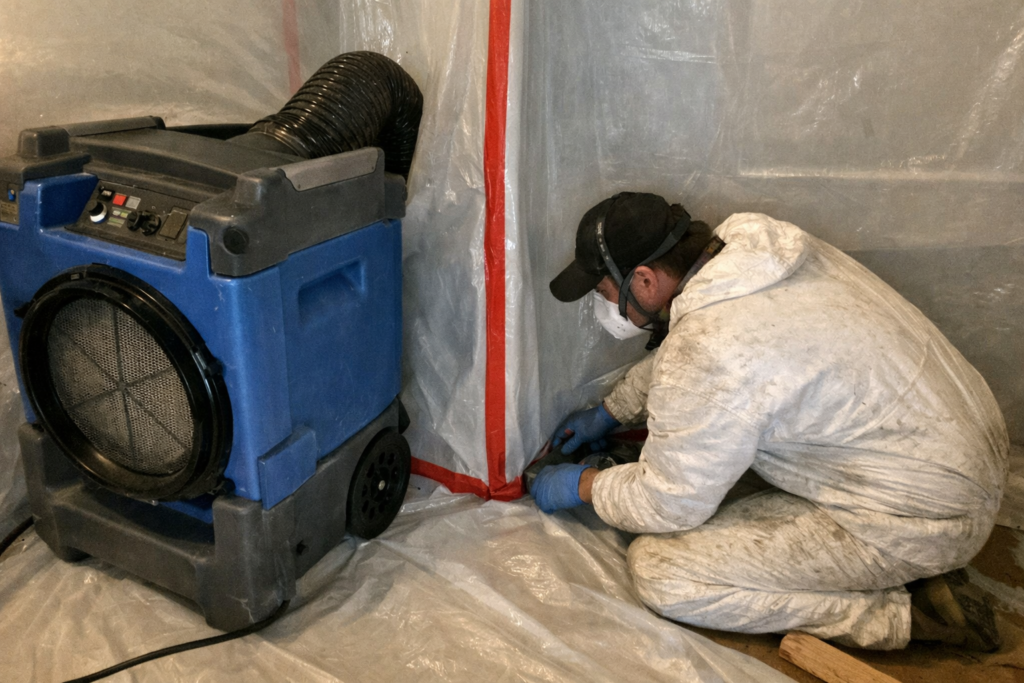
When containment stays tight, the work area is sealed and a clean path is kept for removals, so dust and debris stay in the controlled zone. Communication stays short and practical with quick handoffs and simple notes, so the next crew member knows what was done and what remains for the next visit.
The schedule remains steadier because the scope matches what the crew actually finds, and small changes are handled on the spot to avoid creeping delays later. A concrete moment shows up when a smooth handoff happens at shift change, the added hours estimate lands promptly, and the site stays clean with fewer callbacks for rechecks.
Price mold jobs so you do not rush cleanup or documentation
The patterns that waste time in mold work are bad-fit assignments, sloppy handoffs, scope creep, and a cascade of callbacks that blow schedules. This went sideways when a simple remediation turned into chasing extra rooms after hours, with access surprises and ghosted confirmations that left crews waiting and the estimate bloated.
The pattern you missed was a loose scope that lets rooms drift and people drift apart on expectations, and the cost shows as days of idle time, extra trips, and tired crews, while what caught earlier next time looks like a sharper scope and earlier, clearer handoffs that keep everyone on the same page. It stays practical and calm, underscoring that safety, clear boundaries, and crew limits matter so the job holds steady without surprises.
Keep what brings mold calls and cut what attracts tire kickers
On real mold jobs, steadiness shows up as clear standards, predictable handoffs, and a safety first mindset that holds through busy weeks. Keeping the scope precise and following through on scope changes and inspections builds trust and minimizes rework.
A trade reality moment is when a containment plan is set and a crew member communicates access windows to the client so work can stay on track without sprinting. Over months, the first concrete sign of stability is fewer callbacks, a calmer calendar, and smoother handoffs that stay true to the standards.
Summary
More mold jobs only helps if containment and clearance stay solid. Fix the bottleneck before adding volume. If you’re curious how this differs locally, check the state picker.
FAQs
Why does a busier mold schedule sometimes mean more stress and less profit?
More jobs in the queue usually means less slack in the schedule, and that pressure shows up as overtime and rushed tasks. In real life you see crews moving from one site to the next with little buffer for access issues, change orders, or unexpected moisture.
That mix often leads to rework, callbacks, and higher overtime costs that erode the profit you hoped to lock in. When managed, the schedule keeps a sustainable pace and handoffs are clear enough to avoid rework and wasted time.
How do I avoid bad mold jobs when I still need the work?
Sometimes you take a job because the calendar is slow and the client has a moisture issue you can fix, but the fit isn’t right for your crew or equipment. On real jobs you see unclear scopes, access problems, or tasks that balloon beyond the original estimate, and that leads to rework and unhappy customers.
When it is handled well you see earlier conversations that set clear expectations, a scope that matches crew capabilities, and fewer surprises once the work starts.
What should I standardize first to handle more mold volume?
It happens when every job starts with a new intake and a new guess, so you drift into mistakes and missed details. On real jobs you see drift in what the client expects, inconsistent paperwork, and handoffs that leave out important moisture readings.
Handled well looks like a few basics that stay the same across jobs: a consistent intake note, a common scope outline, and a standard way to report findings. That consistency keeps crews on the same page and reduces rework when the calendar fills up.
How do I grow a mold remediation business without hiring too fast?
Growth shows up when demand climbs but you resist adding bodies too quickly, so you ride the same crew and watch the numbers get stretched. On real weeks you see longer lead times, pinch points, and more callbacks as you try to fit more work in.
Handled well means growth stays measured by cross training, keeping a reliable roster, and tighter scheduling so new work fits without breaking the routine.